FBA vs. FBM: Which Is More Profitable for Amazon Sellers?
FBA trades Amazon-run fulfillment and Prime eligibility for fulfillment and storage costs; FBM keeps control but makes shipping and delivery performance your job.
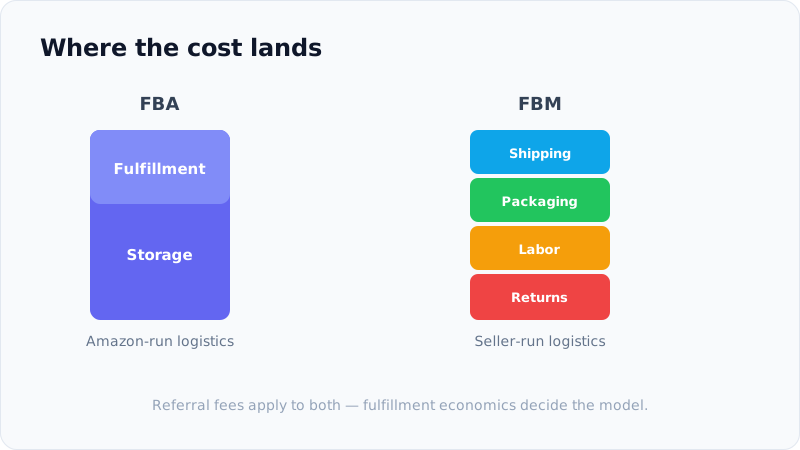
FBA vs FBM has no universal winner. FBA means Amazon stores and ships your inventory, you pay fulfillment and storage costs, and eligible offers can get Prime visibility. FBM means you fulfill orders yourself, avoid FBA fulfillment fees, pay your own shipping and labor, and own delivery SLAs. The profitable choice depends on product size, order volume, carrier rates, conversion lift, and how tightly you can run operations.
The two fulfillment models
Fulfillment by Amazon (FBA)
You send inventory to Amazon before the sale. Amazon stores it, picks and packs each order, ships to the customer, and handles a large share of service and returns flow. You trade direct operational control for Amazon's fulfillment network and Prime-eligible delivery promise.
Merchant-fulfilled (FBM)
You keep inventory in your own warehouse, garage, or 3PL and ship after the order arrives. There is no FBA fulfillment fee, but shipping labels, packaging, labor, returns handling, and delivery performance are yours to manage. FBM can be cheaper when your own shipping economics beat Amazon's bundled service.
Cost comparison at a glance
| Cost dimension | FBA | FBM |
|---|---|---|
| Referral fee | Applies to the marketplace sale | Applies to the marketplace sale |
| Fulfillment fee | Amazon charges for fulfillment by size and weight | No FBA fee; you pay your own pick-pack labor |
| Storage | Amazon storage applies while inventory sits in FBA | Your warehouse, 3PL, or own space carries the cost |
| Shipping | Bundled into Amazon fulfillment economics | You buy labels or negotiate carrier / 3PL rates |
| Prime badge / conversion | Can improve conversion for eligible offers | Depends on seller-fulfilled eligibility and delivery promise |
| Returns handling | Amazon handles much of the workflow | You own the workflow and customer touchpoints |
| Up-front inventory | Send inventory to Amazon before orders arrive | Hold inventory until each order ships |
When FBA usually wins
- Your products are compact, fast-moving, and predictable enough to keep storage efficient.
- Prime eligibility and fast delivery are likely to lift conversion.
- You do not have cheap shipping rates, warehouse labor, or a reliable 3PL yet.
- Your team would rather spend time on sourcing, listings, and ads than daily fulfillment.
When FBM usually wins
- Products are bulky, slow-moving, fragile, customized, or hard to forecast.
- You already have strong carrier rates or a 3PL workflow that beats FBA economics.
- You need tighter control over packaging, inserts, bundles, or customer experience.
- Inventory is seasonal or volatile and you do not want it sitting inside Amazon's network.
The fees that decide it
Because referral fees apply in both models, the decision is usually fulfillment economics plus conversion. Compare FBA's fulfillment and storage against FBM's shipping label, packaging, labor, warehousing, returns, and delivery-performance risk. Then add the revenue side: if FBA improves conversion enough, it can win even when the direct fulfillment cost is higher. If your own operation ships cheaper without hurting conversion, FBM can keep more margin.
Run your own numbers
Run your own numbers SKU by SKU instead of choosing one model for every product. Open Profitlee's Amazon FBA Calculator, Amazon FBM Calculator, or /calc, enter your real shipping, storage, fulfillment, ads, and return assumptions, then compare net profit rather than headline fees.